Master the Game: Custom test protocols changing the way we deal with data!
Custom test protocols changing how we deal with data.

When onboarding new customers, we address outdated test protocols. Typically, these tests involve multi-directional movements where only time is recorded. The issue arises because multiple movements are performed in a single test, making it difficult to determine, for example, if a player is better at turning left or right. Consequently, no specific insights are gathered. With our technology teams do create custom tests tailored to their specific needs and schedule to benchmark sport specific or position specific movements. This method enables teams to integrate testing more effectively with sports science principles.
Custom test example
This test exemplifies how teams develop their own assessments based on sport-specific movements. In this test, the player runs 5 yards backward and forward, repeating this cycle six times. Since this movement is specific to American football, the coach gains valuable data on the player's acceleration and deceleration during both forward and backward movements.
What does the data look like ?
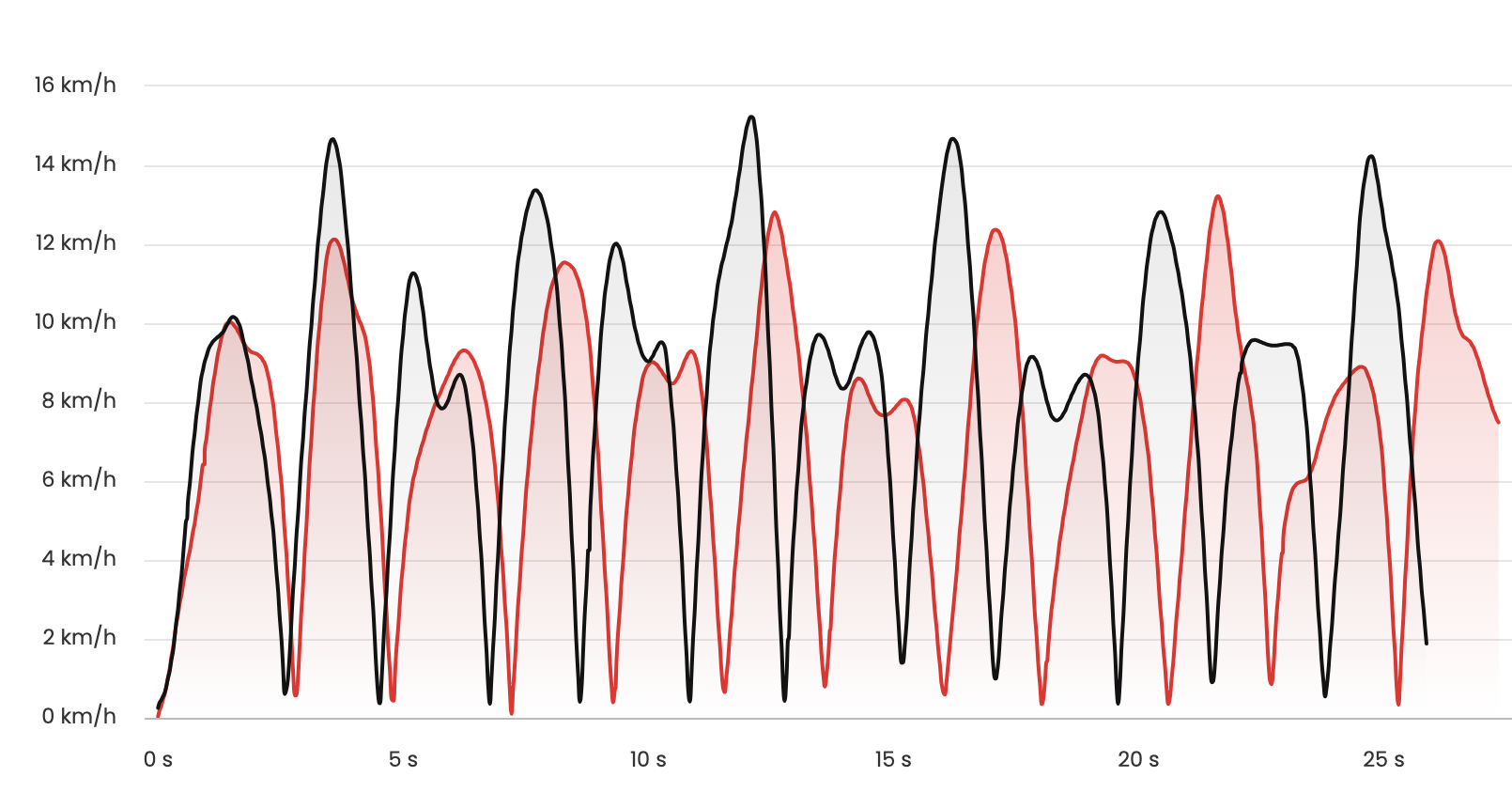
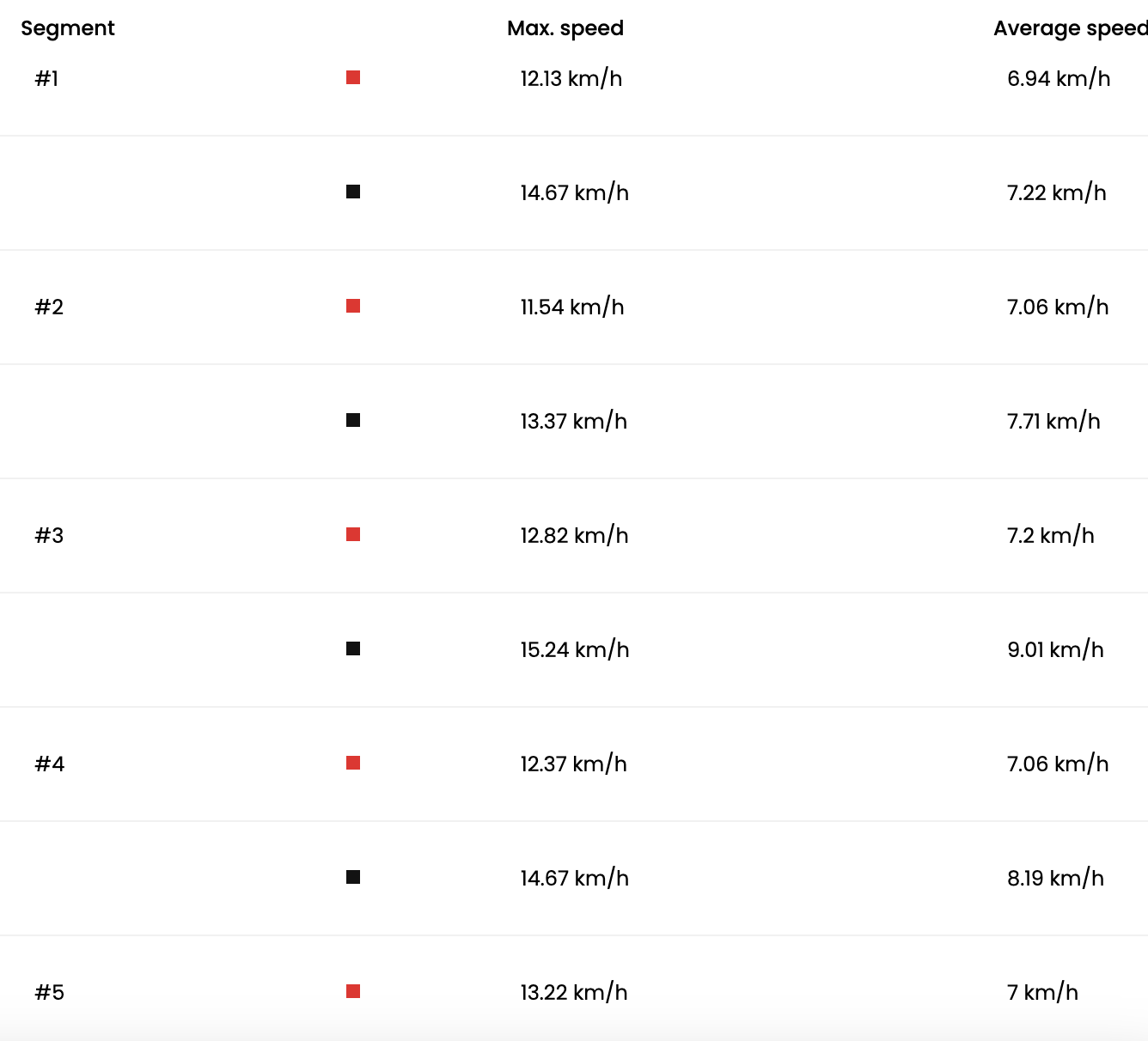
This graph is showing the speed the player can reach during backwards and frontal movements. This is key data to use during RTP process to create benchmarks. Here you can use the max and average speed the player performed during this test. From other graphs you can use also the acceleration and deceleration values.
Compare player's results
Based on the key results from testing player's sport specific movements you're able to define if the player is ready to play again. On the picture below, the red data shows the speed just before the player was injured. The black data shows the speed reached during the latest test to define the RTP moment of that specific player. You see that the player is reaching higher values which supported the coach in his decision to define the player is able to enter the competition again. Often we also receive feedback from teams that, if they see a major drop in the results from a specific player during team testing evaluation, that this is a indication the player is having an injury and specific testing is needed to confirm this standpoint.
Related Articles
Master the Game: The Ledsreact Pro changed the way we organize testing moments!
The Ledsreact Pro changed the way we organize testing moments! The ease of use of the Ledsreact Pro technology enables teams to conduct more frequent testing sessions, often at least once a month during the warm up or specific sprint training ...